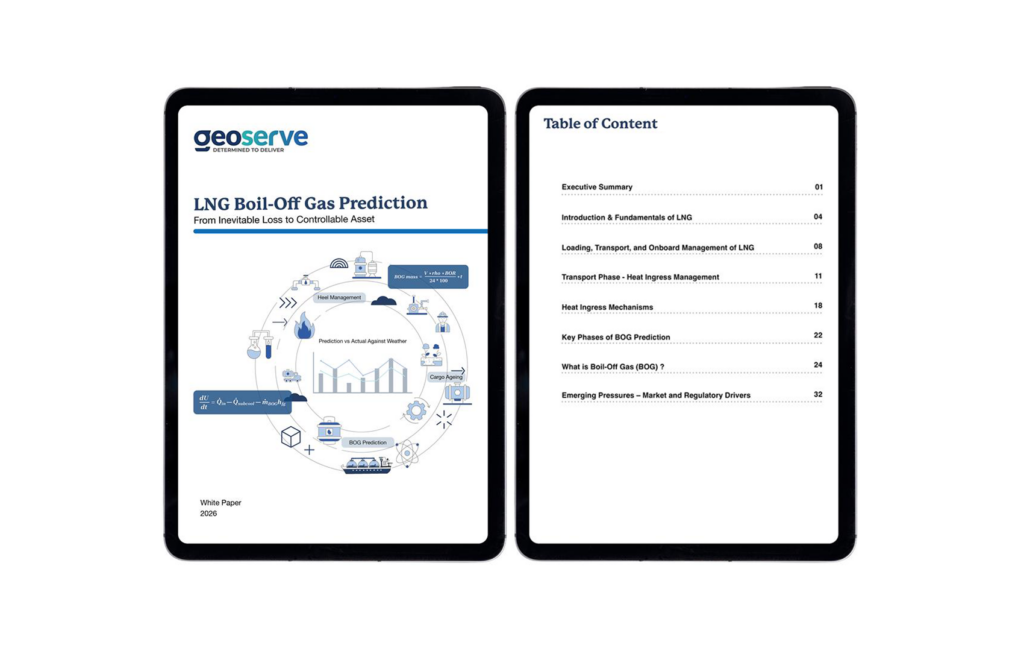
LNG boil-off is no longer a fixed operational assumption, it is a dynamic driver of voyage economics, emissions exposure, and cargo value.
As LNG markets grow more volatile and carbon frameworks tighten, understanding Boil-Off Gas (BOG) behaviour has become essential to commercial voyage performance. This white paper explores the physics, operational realities, and predictive modelling foundations that are redefining how LNG operators manage boil-off, moving from inevitable loss to controllable asset.
Key Takeaways
- Why static Boil-Off Rate assumptions are breaking down under today’s market and regulatory pressures
- How cargo composition, ageing, and vessel conditions drive real voyage BOG dynamics
- What physics-based prediction enables for fuel optimisation, emissions compliance, and stronger voyage margins